
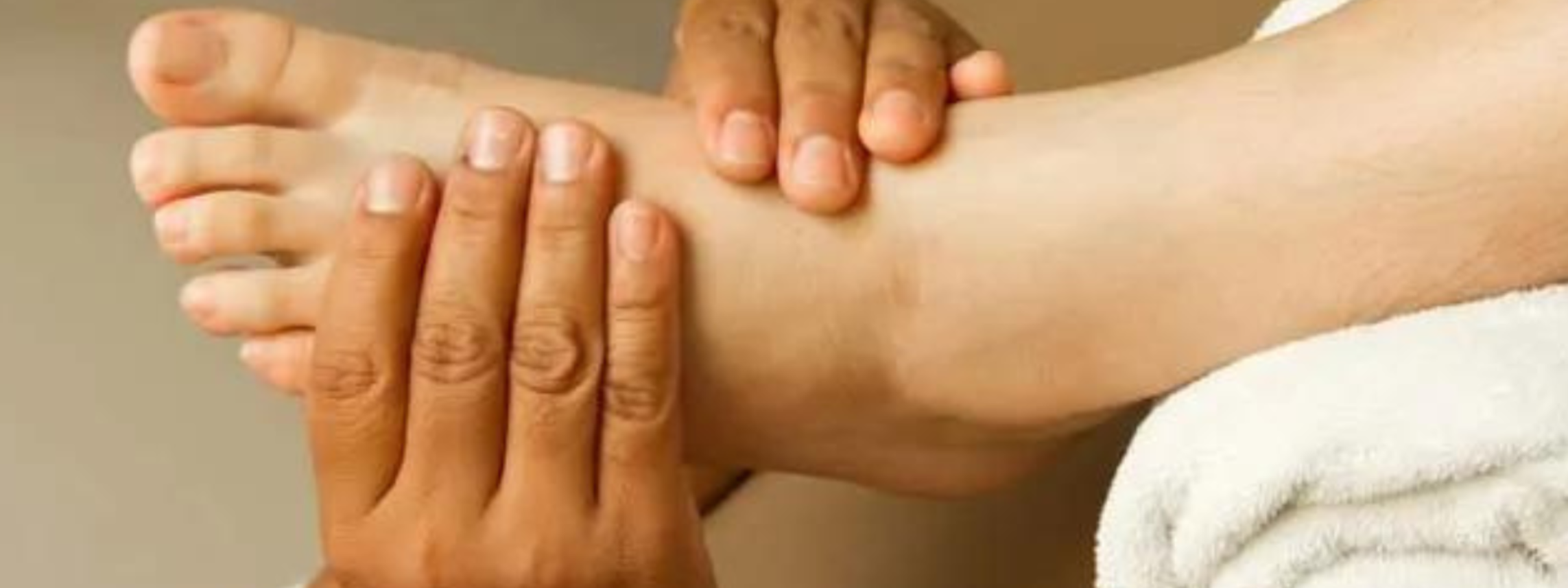
FOOT REFLEXOLOGY: LENDING A HEALING HAND
Reflexology, rooted in ancient Egypt, gained structure through Eunice D. Ingham's 1930s theories on feet mirroring the body's organs, establishing what's now the International Institute of Reflexology with over 25,000 members. Since 1993, around 380 studies have confirmed reflexology's positive effects, including its efficacy in treating conditions like pre-menstrual syndrome. Notably, a 2015 study in the Journal of Complementary and Integrative Medicine found reflexology more effective than relaxation alone in reducing pain for women with multiple sclerosis.
No Tools Needed
Chelsea Lundgren, a certified reflexologist who works at The Healing Path Massage & Wellness in Federal Hill, Fell’s Point and Timonium, Maryland, said reflexology is the “holistic art of applying the thumbs and fingers to reflexes on the feet in order to improve circulation, release stress and tension, and bring the body back to balance.”
While some complementary health practitioners may employ a variety of tools, reflexologists rely on one resource: their hands.
“The practitioner’s hands are number one, and this is because the practitioner can feel congested energy in the reflexes on a client’s feet,” said Lundgren. “Tools, although very effective, create a barrier and the practitioner cannot feel as organically.” She conceded that, when necessary, tools may help save the practitioner’s hands or get into reflexes that require deeper work.
Some reflexologists use creams or oils in their practice; Lundgren favors a base oil of safflower or apricot oil and essential oils to help balance the client.
Endless Benefits
Regardless of tools or oils used, reflexology offered by a trained reflexologist can offer multiple benefits for clients.
“Reflexology’s benefits are endless, but it’s extremely beneficial in releasing stress and tension, which can wreak havoc on every organ and system in our body,” Lundgren said, adding that almost everyone holds some form of stress that may manifest as a serious condition such as diabetes, insomnia, hormonal imbalances, joint pain or depression.
Reflexology also addresses pregnancy-related stress, Lundgren said, and generally reduces stress and tension on a physical, muscular and emotional level. “Clients often feel deeply relaxed and grounded after a session,” she said. Additionally, reflexology can enhance circulation, which may address digestion and insomnia issues, enhance the nervous system and facilitate recovery from injury, according to Lundgren.
A wide range of clients can enjoy those benefits. “It is safe to give reflexology to a newborn all the way to the elderly, as it reduces pain and brings homeostasis to the body, [addressing] whatever the client may particularly need at the time,” Lundgren said. “As reflexology always brings the body back to homeostasis, it can only improve health, not put it in jeopardy.”
Reflexology Training & Marketing
If you’re considering becoming certified in reflexology, be sure to check the requirements in your state, as they vary considerably. “Maryland has no requirements, [whereas] Florida … requires a practitioner to first and foremost be a massage therapist before practicing reflexology on the public,” said Lundgren.
Lundgren takes a hands-on approach to marketing her practice. “The absolute best way to market reflexology is by having a potential client receive a session, even if it’s just for 10 minutes. Experiencing is believing,” she said. Also, referrals, word-of-mouth and written information about the benefits, such as a brochure, can help promote the practice.
Practitioner Perks
As far as Lundgren is concerned, her chosen professional path is ideal. “I can help any person on the face of the earth—who has feet—with their health and receive a very deep satisfaction in helping them calm down or feel better,” said Lundgren. “My clients are often vulnerable, which I don’t take for granted. They trust in me. Plus, my ability to help improve their health gives me great happiness.”