

THE ORCHESTRA CONDUCTOR: The Neuro-Immune-Endocrine Symphony
THE ORCHESTRA CONDUCTOR
The human body is a complex organism. It is composed of different systems, subsystems, organs, tissues, enzymes, and fluids. The objective is always the maintenance of internal balance. This entire ensemble is referred to as the neuro-immune-endocrine system.
The nervous system, much like the endocrine system, plays a key role in all of this control and coordination function. Both come together to precisely coordinate vital functions. Thus, they constitute the neuroendocrine system.
They truly coordinate, control, maintain internal balance, and transmit messages. "Hormones and messages are important, but context is also important for the neuro-immune-endocrine system." The cellular activities of the organism require a stable environment. In other words, a process in which the internal systems of the organism maintain optimal parameters despite variations in environmental conditions.
Clearly and hierarchically involved in this process are the immune-neuro-endocrine systems. The ultimate goal is to maintain balance. Let's talk about the neuroendocrine system. We can consider it as the set of structures that make up the endocrine system and the part of the brain dedicated to the production, control, and transmission of the substances they generate.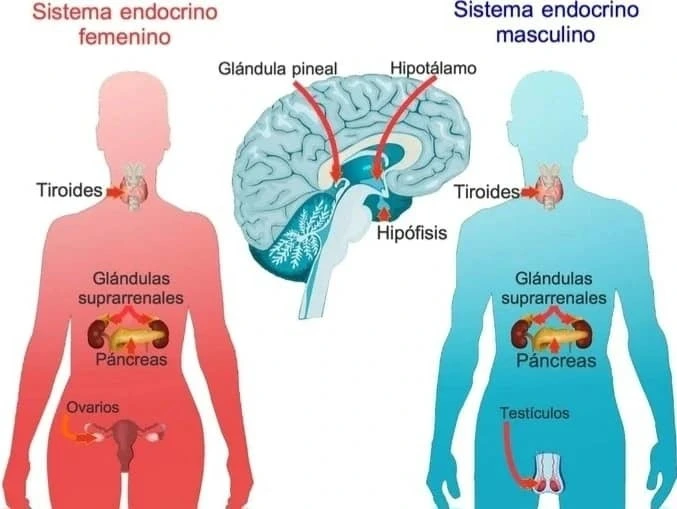
It is a vital system for human beings. These hormones primarily travel through the cardiovascular system to the tissues they act upon. The neuroendocrine system begins in the hypothalamus. From there, and passing through the pituitary gland, different neuroendocrine axes can be generated.
Among the most important axes, three stand out.
All these neuroendocrine axes have a constant interrelation and influence. They are physiological axes, responding to different stimuli and responsible for coordinating vital functions. However, many times, the demands of the environment are too demanding and the balance is disrupted. For example, the stress axis or hypothalamus-pituitary-adrenal axis allows us to respond acutely to danger.
However, we cannot escape danger our entire lives. This stress axis will influence the other neuroendocrine axes. For instance, it may paralyze the hypothalamus-pituitary-gonadal axis. At the same time, this overactivation of the stress axis will inhibit the thyroid axis, which is responsible for activating the energy metabolism in our cells.
Its unique function is not just to defend us as if it were an army. Its main task is to monitor and maintain the balance of the organism, in close connection with the neuroendocrine system. This monitoring function doesn't mean our immune cells behave like police or soldiers. The function of the immune system goes beyond that, watching for errors in judgment and understanding.
Our immune system is capable of detecting danger, determining and organizing effective responses. Both mechanisms of immune alertness and tolerance are crucial for balance and coexistence. This external barrier is our common mucosal system. This common mucosal system has the peculiarity of having structures containing immune cells attached to it.
All these mucosal surfaces have great communication via the lymphatic system. And within this large barrier, we have different armies. The next army is the adaptive immune system, specific to humans and composed of T and B lymphocytes. Over time, they mature and become cells with immunological memory, necessary for the effector phase and to confront second infections. Therefore, the neuro-immune-endocrine system is the true conductor of everything that happens in our organism.
Always with the sole purpose of internal balance or homeostasis.
Alejandra Giacometti
Holistic and Clinical Reflexology
Applied Clinical Reflexology